

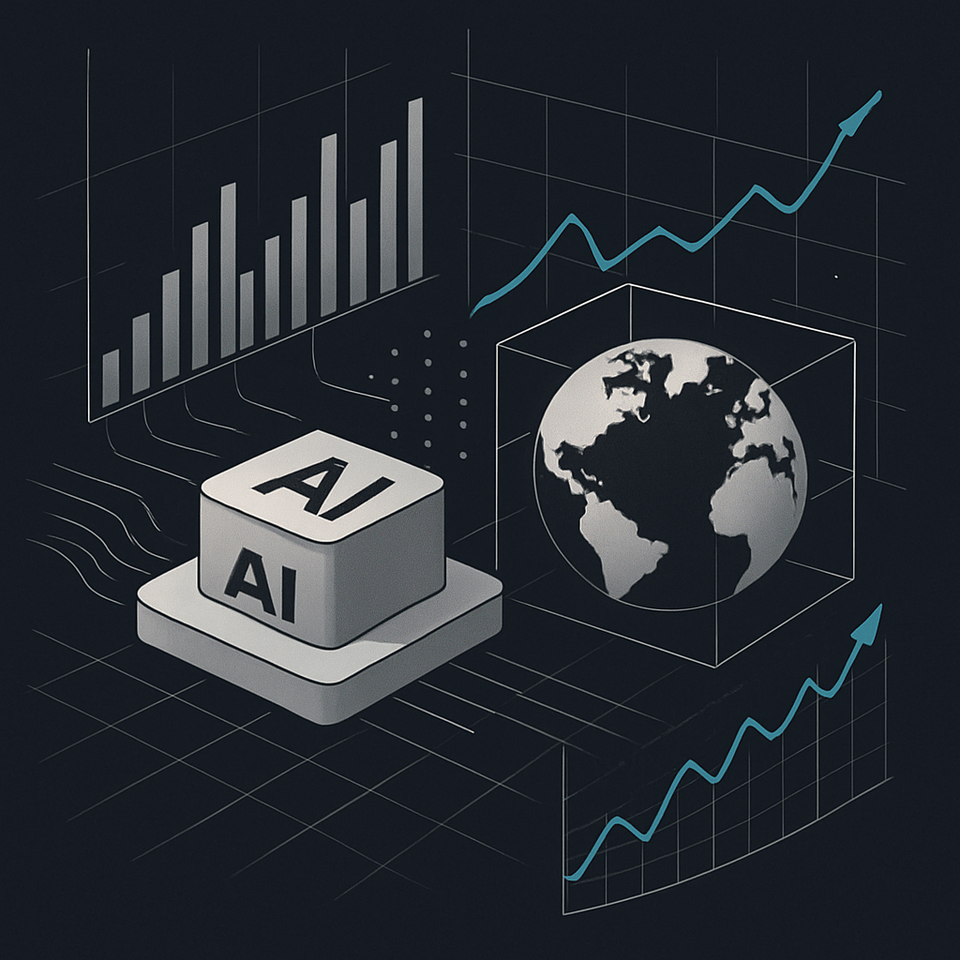
Introduction: The New Imperative of AI in Long-Term Investing
AI in long-term investments is reshaping personal finance and the way individuals plan for the future in 2025. The widespread adoption of artificial intelligence is revolutionizing how institutions and individuals manage portfolios, analyze risk, and forecast market changes. This technology empowers investors by rapidly processing vast datasets, identifying trends that were previously inaccessible, and automating complex financial operations. The shift toward AI-driven investing is not just a temporary trend—it represents a foundational change for those striving to build resilient, diversified portfolios. To remain competitive, both professional asset managers and retail investors must understand how AI transforms long-term investment strategies and what it means for their financial future.
What Is AI in the Context of Long-Term Investments?
AI in long-term investments encompasses a suite of technologies that learn from financial data and adapt strategies over time. Core tools include machine learning algorithms, which detect hidden patterns and forecast future asset behavior, and natural language processing, which interprets financial news, earnings reports, and social sentiment in real time. Furthermore, predictive analytics help estimate market direction and risk, while automation takes over routine rebalancing and tax planning. For instance, AI-powered robo-advisors suggest diversified investment portfolios based on individual risk profiles and automatically rebalance them as conditions change. Additionally, deep learning models and reinforcement learning provide portfolio managers with adaptive solutions. This capability allows AI to continuously learn, meaning investment strategies improve as markets evolve.
The Value of AI for Long-Term Investors
For long-term investors, AI delivers several invaluable advantages. These include sustained growth, capital preservation, and higher risk-adjusted returns. The modern market faces persistent volatility, shifting economic landscapes, and unpredictable events, all obstacles that traditionally hinder portfolio performance. However, with AI, data analysis becomes systematic and comprehensive. AI platforms can process thousands of economic indicators, corporate announcements, and alternative datasets in mere seconds. They also reduce the impact of cognitive biases, offering more objective investment recommendations than traditional methods. Notably, sophisticated simulations enable investors to assess how portfolios might react to market shocks, policy changes, or black swan events. By minimizing emotional decision-making and increasing allocation efficiency, AI in long-term investments positions investors for strong, consistent growth. According to [OECD report](https://www.oecd.org/finance/), technology-led investment approaches are essential for sustainable financial planning in the future.
Building Smarter Portfolios: AI-Based Strategies
AI integration starts with goal-setting and risk tolerance. Using predictive analytics, robo-advisors construct portfolios tailored to individual needs, regularly rebalancing allocations as markets shift. Factor-based investing, enhanced by AI, adapts to multiple influencing dimensions like value, momentum, and quality, cutting through daily volatility. Natural language processing enables advanced sentiment analysis, offering a clear picture of investor psychology around sectors or stocks. Moreover, AI automates tax loss harvesting and timing of asset sales, boosting after-tax returns. For institutional players, scenario planning powered by AI stress-tests portfolios under extreme market conditions or sudden economic shocks. This form of analysis allows for robust risk mitigation strategies and ensures that investment objectives align with regulatory obligations. By combining automated processes with human oversight, investors achieve a flexible approach to long-term investment in 2025.
Governing the Risks: Ethical and Regulatory Challenges
Risk management is more important than ever as AI in long-term investments becomes mainstream. Concerns include algorithmic bias, overfitting, and lack of transparency. If data used to train AI systems is incomplete or biased, recommendations can become distorted, jeopardizing portfolio outcomes. Furthermore, many AI models act as ‘black boxes,’ making it hard for investors and regulators to audit or interpret their decisions. There’s also the broader risk that with widespread adoption, correlated behavior from AI-driven funds could lead to systemic market risks. Regulators now emphasize standards for explainable AI, data security, and policies preventing discriminatory practices. Regular stress-testing, comprehensive governance, and transparent monitoring are essential safeguards as reliance on AI grows. Investors must strike a balance—embracing automation’s efficiencies while maintaining robust human oversight for ethical, safe, and effective use of AI in long-term investments. For further reading on AI ethics in finance, the [IMF AI Guide](https://www.imf.org/en/Publications/fandd/issues/2022/06/artificial-intelligence-in-finance) provides valuable insight.
Opportunities Unlocked: Personalization, Emerging Markets, and Sustainability
AI in long-term investments unlocks new opportunities by enabling extreme personalization and targeting high-potential growth areas. Advanced models now incorporate ESG (Environmental, Social, and Governance) metrics, making it easier for investors to pursue sustainable or impact-driven portfolios. AI can harness unconventional datasets, like satellite images of infrastructure development or shipping trends, to spot investment prospects in emerging markets. Additionally, these technologies allow for dynamic risk profiling, constantly adjusting asset allocation as investors age or as their financial goals shift. The ability to process massive, disparate datasets gives AI a unique edge in identifying signals missed by traditional analysis. This powers not only better returns but also more responsible and transparent investing. In 2025, sustainable finance and AI are increasingly interlinked, drawing capital from institutional and private investors alike who wish to align financial returns with social values.
AI in Wealth Management: Advisors and Automation in Tandem
Wealth management has seen a paradigm shift due to AI in long-term investments. Firms use AI to build detailed client profiles, analyze behavioral patterns, and deliver tailored recommendations that adjust to life events and economic changes. Advisors employ AI-generated scenarios to illustrate diverse potential outcomes for their clients, making financial planning more tangible and data-driven. Automation now handles routine portfolio management, compliance checks, and reporting, freeing advisors to focus on strategic problem-solving and relationship management. The hybrid model, combining technology and human expertise, provides best-in-class client experience. Clients benefit from enhanced transparency, proactive adjustments to financial plans, and investments that respond intelligently to their evolving goals.
Future Outlook: AI, Regulation, and Changing Investor Behavior
Looking ahead, AI in long-term investments continues to evolve as technology, regulation, and investor sophistication advance. Regulatory bodies increasingly require greater transparency and integration of real-time compliance measures for AI systems. As digital assets become more prevalent and cross-border investing grows, AI platforms will facilitate seamless compliance across different legal frameworks. At the same time, widespread access to AI-driven tools is closing the knowledge gap between professional and retail investors. Behavioral finance, powered by AI analytics, helps refine portfolio adjustments as personal circumstances and macroeconomic conditions change. Innovations like quantum computing and blockchain promise even more disruption in how financial data is processed and secured. As asset managers and fintech firms compete in creating proprietary AI solutions, the pace of innovation is set to accelerate, raising standards for performance and client outcomes.
Case Studies: Real-World Applications of AI in Long-Term Investments
Consider a global pension fund in 2025 using AI to manage a range of asset classes. By analyzing geopolitical events, social trends, and real-time economic data, their AI system swiftly reallocates assets during periods of volatility—reducing losses and capitalizing on rebounds. Meanwhile, retail investors benefit from robo-advisors that provide diversified portfolios tailored to evolving goals, risk tolerance, and even sustainability preferences. For instance, a retiree can use an AI platform to optimize social security withdrawals and adjust asset allocation as health needs change. On another front, ESG-focused venture funds rely on AI to monitor real-world impact metrics, ensuring capital supports truly sustainable business models. These examples demonstrate how AI supports both large-scale and individual investors alike in achieving robust outcomes and aligning strategies with personal or institutional values.
How to Evaluate AI Tools for Your Investment Needs
Selecting the right AI tools for long-term investments requires careful evaluation. Investors should assess track records for accuracy, transparency, and adaptability. Trustworthy platforms disclose their models, data sources, and performance histories. Security is paramount; ensure platforms adhere to data protection standards and robust cybersecurity protocols. Look for those that offer customizable insights, allowing for integration with unique financial goals or constraints. Investors should also seek solutions that blend AI automation with access to human expertise, ensuring well-rounded support. Lastly, staying updated on new tools and regulatory changes is critical—choosing platforms that evolve alongside technology can future-proof your investment strategy.
Developing AI-Driven Financial Literacy
As AI in long-term investments becomes standard, financial literacy must evolve. Investors need to understand the basics behind algorithms and how predictive analytics influence their portfolios. Many financial education platforms now include modules explaining AI concepts and practical implications for investing. This new wave of literacy focuses on interpreting AI outputs, questioning assumptions, and proactively adapting strategies. By developing these skills, investors can make more confident decisions and capitalize on opportunities generated by technological advances. Education also fosters ethical awareness and assists investors in recognizing limitations and risks involved in AI adoption. As a result, users are empowered to select and supervise AI investments more effectively.
Conclusion: A New Standard for Investing
AI in long-term investments has created a new standard in portfolio management, risk analysis, and wealth growth. Success in 2025 and beyond will depend on an investor’s willingness to continually adapt, assess emerging technologies, and integrate smart algorithms into holistic financial plans. As markets grow increasingly complex, mastering AI tools and the underlying logic forms a crucial part of maintaining a resilient portfolio. Ongoing education, regular oversight, and ethical consideration are the pillars for effective use. Those who embrace AI effectively can expect not only improved returns but also personalized, values-driven investment outcomes. To stand out in the new era of finance, investors must recognize AI-driven investing as an essential strategic advantage and continually refine their practices to leverage the latest opportunities and manage emerging risks.
 admin
admin