

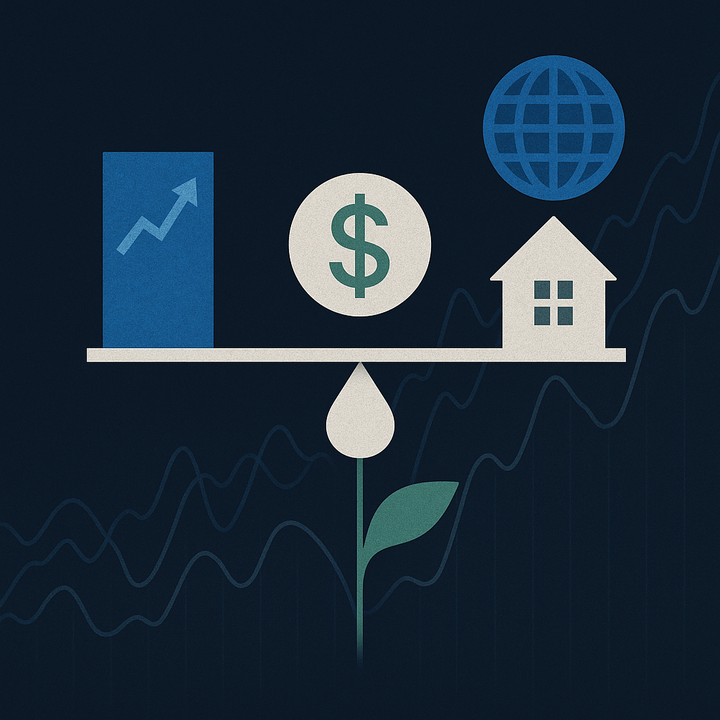
Introduction: The Impact of Diversification Volatile Markets
Diversification volatile markets is an idea every modern investor must understand. In recent years, we have seen historic levels of market volatility brought about by disruptive global events, ranging from geopolitical conflict to unexpected technological leaps and global pandemics. All these factors have highlighted the critical role that diversification plays in protecting portfolios and delivering more consistent returns. Facing uncertainty has become the norm, and building a portfolio that stands strong through turbulent times is now a primary objective for both individuals and institutions. By looking closely at what diversification really means and how it functions in volatile markets, investors can position their portfolios to weather the financial storms that define our era.
Understanding Diversification in a Volatile Environment
Diversification is the practice of spreading investments across various assets, sectors, and geographic regions. Its primary goal is to reduce risk exposure associated with any one area. Instead of placing all your resources into a single stock, sector, or region, you distribute your assets so that declines in one segment are offset by stability or gains in another. In recent volatile markets, this principle has become more important than ever. Investors use this approach by blending equities, bonds, commodities, real estate, and sometimes alternative investments such as private equity or hedge funds. Since each asset type responds differently to economic shifts, a diversified portfolio smooths out the impact of sudden downturns and spikes in specific areas, resulting in a steadier investment experience over time.
Why Diversification Is a Critical Strategy in Volatile Markets
The events of the past decade show that isolated shocks—like trade disputes, supply chain breakdowns, and sudden policy changes—can trigger sharp reversals in specific markets or entire sectors. If a portfolio relies too heavily on one area, losses can be severe and difficult to recover. A well-diversified portfolio, on the other hand, reduces exposure to these shocks. Studies have shown that diversified portfolios tend to experience fewer extreme losses than concentrated holdings, especially when market volatility is high. Academic research consistently finds that diversifying across asset classes, industries, and geographies results in more stable returns and helps investors meet long-term financial goals. As trading technologies advance and information circulates faster, the risk of sudden sentiment shifts rises, making diversification in volatile markets absolutely critical.
Core Strategies for Diversification in Volatile Markets
To achieve true diversification, investors must do more than simply own many assets. It is important to consider correlations between different securities, how each responds to macroeconomic forces, and which assets tend to move in opposite directions. For example, mixing stocks with government bonds can provide safety during stock market declines. Investing across different global markets exposes a portfolio to new growth opportunities and different risk profiles. Additionally, spreading investments across multiple sectors lessens the impact of a downturn in any single industry. Using funds like ETFs or mutual funds can facilitate diversification, offering access to a broad swath of assets with one investment. Some advanced investors use factor-based approaches or add alternative assets to further buffer against volatility. This tactical and strategic allocation makes a portfolio agile while maintaining a firm foundation.
Balancing Risk and Return: The Diversification Trade-Off
Diversification volatile markets can substantially reduce unsystematic risk, which is the risk unique to specific assets or sectors. However, it is important to remember that diversification cannot eliminate systematic risk, which is endemic to the entire market. While blending assets cushions downside shocks, it may also cap potential upside—outperformance by a single asset becomes less visible in a larger, diversified portfolio. The essential trade-off is between loss mitigation and participation in market growth. Sophisticated portfolios optimize this balance, maximizing risk-adjusted return without unnecessary exposure to dramatic losses. Over-diversification (“diworsification”) can dilute returns, increase complexity, and heighten transaction costs. It’s essential for investors to align their diversification approach with their risk tolerance, time horizon, and financial objectives. Empirical studies repeatedly confirm the long-term benefits of this discipline, with diversified strategies outperforming concentrated bets across market cycles.
Tactical Allocation During Volatile Markets
One often overlooked benefit of diversification during volatile markets is the ability to execute tactical reallocations. When markets swing violently, some assets become underpriced while others may overheat. Investors can rebalance their portfolios by shifting a portion of holdings from those that have performed well into those that are temporarily out of favor. This disciplined action, supported by a diversified structure, can enhance returns when mispricings correct over time. For example, during sharp equity sell-offs, increasing allocations to high-quality bonds or undervalued international stocks might reduce risk and set up for future gains. Investors who view volatility as an opportunity can systematically harvest value, rather than reacting emotionally. Nevertheless, all tactical decisions should fit within a long-term, diversified strategic plan to avoid knee-jerk reactions that harm long-term portfolio health.
Common Pitfalls and Misconceptions About Diversification
Despite its well-known benefits, diversification is often misunderstood or misapplied—especially in the context of volatile markets. Many investors believe simply owning many stocks ensures safety, but if those holdings are concentrated in the same market sector or region, the approach does little to lower risk. Others may neglect ongoing rebalancing, allowing their portfolios to drift out of sync with their original diversification plan. Additionally, investors sometimes over-diversify, spreading their resources too thin across similar assets, which can reduce the positive effects of diversification and increase costs. Understanding sector weights, regional exposure, and correlations between assets is vital. Finally, while proper diversification surely cushions against company- or sector-specific shocks, it does not provide absolute protection during market-wide crises, since correlations between assets tend to rise dramatically in times of stress. Ongoing education and portfolio review are therefore essential parts of any successful strategy in volatile markets.
The Evolving Science of Diversification in Today’s Markets
Adapting to changing market dynamics is fundamental for maintaining an effective diversification volatile markets approach. New asset classes, innovative ETFs, and digital financial products like cryptocurrencies alter the universe of opportunities and risks. Investors must evaluate whether such new options contribute real diversification or just add complexity. With the rise of global interconnectedness, events in one region can cascade far more quickly across economies, highlighting the importance of not only diversifying assets but also regularly reevaluating their risk exposures. Technology, including robo-advisors and automated portfolio platforms, now helps many individual investors access sophisticated diversification strategies once reserved for professionals. Yet, regardless of the tools used, the underlying principles remain the same: broad exposure, regular review, and continual education about risks and opportunities.
Long-term Benefits and the Process of Continuous Diversification
Sustainable success in volatile markets is often the product of consistent, active diversification. As economic conditions and market relationships evolve, so too must the structure of an investor’s portfolio. This might mean adding exposure to emerging industries or reducing allocation to sectors in decline. Regular rebalancing helps lock in gains from outperforming areas and reallocates capital to those presenting greater value. Furthermore, diversification is not static; it adapts with personal changes in financial goals or risk tolerance. Investors must treat diversification as a process to be maintained and refined over time, not a task to check off a list. Empirical evidence supports that investors practicing disciplined, long-term diversification across asset classes and regions achieve more stable outcomes, reduced volatility, and better risk-adjusted performance than those with concentrated portfolios.
Implementing Diversification in Practice
Getting started with diversification in volatile markets does not require large amounts of capital or expert-market knowledge. For most individuals, starting with a mix of equities and bonds via low-cost index funds or ETFs is an accessible pathway. As confidence and resources grow, including international stocks, real estate investment trusts (REITs), and even small positions in alternatives can provide added layers of diversification. It is vital to regularly assess the portfolio for accidental concentration—such as excessive exposure to one sector or region—and make adjustments as needed. Technology makes portfolio reviews and rebalancing easy, but the investor’s understanding of market trends and evolving risks is still indispensable. Additionally, seeking financial advice or using automated tools amplifies the success rate, particularly when markets remain unpredictable and volatile.
Real-World Examples of Diversification in Action
Looking at recent history, well-diversified portfolios have demonstrated their resilience in sharp corrections. During the early 2020 pandemic crash, portfolios that held bonds and international equities fared much better than those concentrated solely in U.S. technology stocks. The energy and travel sectors, while crushed initially, eventually rebounded, benefiting diversified investors who maintained some allocation in those areas. Similarly, when inflation fears rocked capital markets in 2022, real assets like commodities helped insulate portfolios lagging in traditional fixed income. The lesson is clear: no single asset class leads in every environment, and diversification volatile markets allows investors to stay invested through all cycles while avoiding catastrophic losses tied to specific events or sectors.
Conclusion: The Timeless Value of Diversification in Navigating Volatile Markets
Investors face complex choices as market volatility becomes the new normal. Diversification volatile markets is not merely a defensive tactic but a framework for intelligent growth and long-term discipline. By spreading exposures, investors avoid being blindsided by extreme movements in any single area, and also keep open the doors to new opportunities. Successful diversifiers blend patience, routine portfolio reviews, and continuous education to adapt as economic conditions evolve. While diversification cannot erase all risks, it reliably reduces the chance of devastating losses and enhances opportunities for consistent returns. To discover more about building balanced portfolios and mastering risk, explore our detailed resources in Investing and Diversification and empower your financial journey in any market climate.