

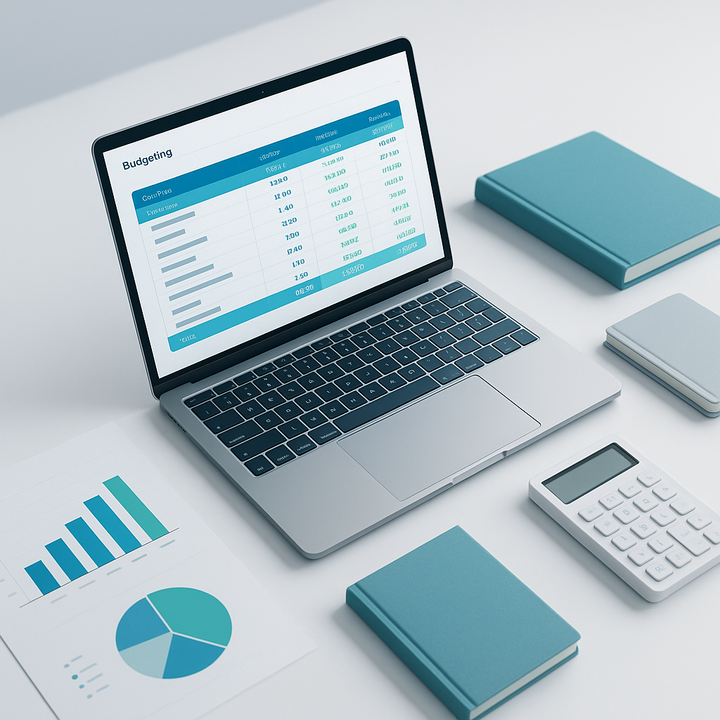
Introduction: The Growing Importance of Efficient Personal Budgeting
Efficient personal budgeting is a vital skill in today’s rapidly changing economy. Inflation rates fluctuate constantly. Digital technologies also transform how we manage money. Therefore, efficient personal budgeting equips individuals to make informed choices and build security. Practicing efficient personal budgeting provides a buffer against uncertainty. It also strengthens preparedness for financial challenges or opportunities. As more people access online banking, investment platforms, and diverse credit options, navigating these fragmented financial environments without a clear plan becomes risky. Thus, focusing on efficient personal budgeting from the start empowers people to shape their financial futures proactively.
What Is Efficient Personal Budgeting?
Efficient personal budgeting involves tracking income, controlling expenses, and organizing cash flow to reach financial goals. Unlike casual approaches, efficient budgeting uses deliberate frameworks. These frameworks account for monthly income, essential bills, discretionary spending, savings targets, and future investments. A well-made budget acts as a decision matrix. It breaks down abstract monetary hopes into practical, measurable actions. The process adapts as circumstances change. For example, it remains relevant when jobs change, expenses shift, or financial priorities evolve. Mastering this discipline is critical for responsible borrowing, sustainable investing, and preparing for unexpected events. Effective personal budgets reduce anxiety about money. They also minimize susceptibility to broader economic shocks.
The Importance of Efficient Personal Budgeting for Investors
Efficient personal budgeting is essential for anyone considering investments. This applies whether starting a retirement portfolio or buying assets like real estate. Investors who track cash flows and keep budgets up to date can quickly pinpoint available funds for investing. Moreover, this discipline highlights overspending and reveals chances to redirect money toward higher-growth uses. When efficient personal budgeting combines with good investing habits, it supports tax optimization. It also connects spending choices with portfolio risk levels and helps identify behavioral pitfalls, such as overreacting to short-term market shifts. Investors who budget efficiently stay better prepared for downturns. Their lifestyle and investment plan both rest on clear, quantifiable foundations.
Key Strategies for Practicing Efficient Personal Budgeting
To begin, efficient personal budgeting requires gathering all sources of income. This includes paychecks and freelance work. Next, categorize fixed and variable expenses. Split essential costs—like rent, utilities, and insurance—from non-essentials such as entertainment, travel, or optional upgrades. Using spreadsheets or digital apps increases accuracy and keeps the process transparent. Afterward, set specific savings goals for emergencies, future investments, or life milestones. The popular 50/30/20 rule suggests allocating 50% of income to needs, 30% to wants, and 20% to savings or investments. While this provides a good starting point, efficient budgeting means adjusting these ratios to fit personal goals and current realities. Reviewing the budget monthly or quarterly enables prompt corrections if spending drifts or income changes. Leveraging banking dashboards and budgeting tools helps individuals catch subscription leaks, avoid overdrafts, and make real-time adjustments for better outcomes.
Building an Emergency Fund Through Efficient Personal Budgeting
One immediate benefit of efficient personal budgeting is building an emergency fund. By earmarking a percentage of each paycheck, individuals create a safety net for sudden expenses like car repairs or medical bills. Efficient personal budgeting ensures automatic funding for emergency savings. This reduces the temptation to spend those resources unnecessarily. Over time, a fully funded emergency account boosts confidence. It also allows for more aggressive investing elsewhere, knowing that basic needs are covered.
Common Pitfalls of Inefficient Budgeting
Failing to apply efficient personal budgeting often leads to mounting debt, overlooked bills, and unclear financial health. Many people underestimate the impact of untracked subscription fees, late payment penalties, and high-interest loans on long-term wealth. Without efficient budgeting, it is easy to spend more than you earn and miss investment opportunities. During financial distress, those without a plan may default to crisis-mode thinking. They might liquidate investments at a loss, take on expensive credit, or neglect essential needs. In contrast, efficient personal budgeting keeps spending aligned with priorities and protects against these dangers.
Benefits Beyond Avoiding Financial Risk
Efficient personal budgeting does more than prevent financial problems. Practicing efficient budgeting uncovers hidden resources in household finances. This enables bigger savings rates and opens doors to higher-yield investments. Maintaining clarity in financial affairs allows people to plan for large purchases, educational goals, or career changes. This approach minimizes reliance on high-interest loans. Efficient personal budgeting brings flexibility. Users can adapt quickly to new jobs, tax changes, or major life events. This clarity also supports strategic negotiations with service providers and helps optimize tax benefits. Ultimately, efficient budgeting gives people more freedom, control, and confidence to seize new opportunities as they arise.
Integrating Technology for More Efficient Personal Budgeting
Advances in technology have made efficient personal budgeting easier than ever. Top-rated budgeting apps now pull in bank transactions automatically, tag expenses, and offer detailed reports on spending habits. Many apps use artificial intelligence to forecast spending and suggest ways to save. Open banking lets consumers see complete financial pictures across institutions from a single dashboard. This makes efficient personal budgeting far more accurate. Apps with automated savings tools move money into investment or emergency accounts with minimal effort. Some platforms even provide educational resources and personalized tips based on progress. As these technologies improve, efficient personal budgeting becomes more tailored. This saves time, reduces manual effort, and optimizes results.
The Role of Financial Education in Promoting Efficient Personal Budgeting
Financial education and efficient personal budgeting go hand in hand. Knowledgeable consumers set realistic budgets, stick to savings targets, and avoid traps like lifestyle creep or emotional investing. Education empowers individuals to assess spending, understand debt implications, and make informed investment decisions. Many community organizations, employers, and online platforms now offer courses to strengthen budgeting skills. Investing time in these resources amplifies the effectiveness of efficient personal budgeting. This foundation supports sustained financial well-being.
Case Studies: Efficient Personal Budgeting in Action
Real-world examples show how efficient personal budgeting can transform lives. Consider a young professional who sets up an automated system to track and categorize expenses after landing a first job. By reviewing these figures monthly, they quickly identify costly habits and adjust allocations. This frees up hundreds of dollars for investment. Over several years, steady discipline compounds. The result is a robust investment portfolio and a solid emergency fund. In another case, a family faces job loss but uses their detailed budget to trim discretionary expenses immediately. They avoid dipping into retirement savings. Efficient personal budgeting, in both cases, acts as protection and a springboard for future growth.
Addressing Lifestyle Inflation Through Conscious Budgeting
As income rises, the temptation to increase spending—known as lifestyle inflation—can erode wealth-building potential. Efficient personal budgeting counters this by reinforcing intentional decision-making about expenses. By increasing savings and investment allocations as income grows, individuals ensure that financial progress leads to lasting security. Regularly updating the budget to reflect changes helps resist unnecessary upgrades and preserves the benefits of raises or windfalls. In this way, efficient personal budgeting becomes a lifelong support system for sustainable financial growth.
Long-Term Wealth Building with Efficient Personal Budgeting
The greatest payoff from efficient personal budgeting appears over decades. Those who consistently practice efficient personal budgeting build expanding reserves of assets. They also gain more options for retirement and simplify funding education or homeownership. By setting and refining targets over time, the habit of budgeting allows gradual progress toward major life goals without undue financial stress. Because it enables better risk management and adaptability, efficient personal budgeting positions individuals not just to survive market cycles, but also to take advantage of them with confidence and skill.
Conclusion: Why Efficient Personal Budgeting Matters More Than Ever
Efficient personal budgeting remains a cornerstone for navigating today’s evolving financial landscape. This discipline helps control spending, drive investment, and create a buffer against risk. Incorporating technology and lifelong education into personal budgeting practices enhances both resilience and opportunity. Focusing on efficient personal budgeting does more than protect against hardship. It also enables purposeful wealth creation and ongoing financial security. For those who wish to deepen their understanding and build lasting skills, our Financial Education category offers further guidance and resources tailored to mastering personal financial management.