

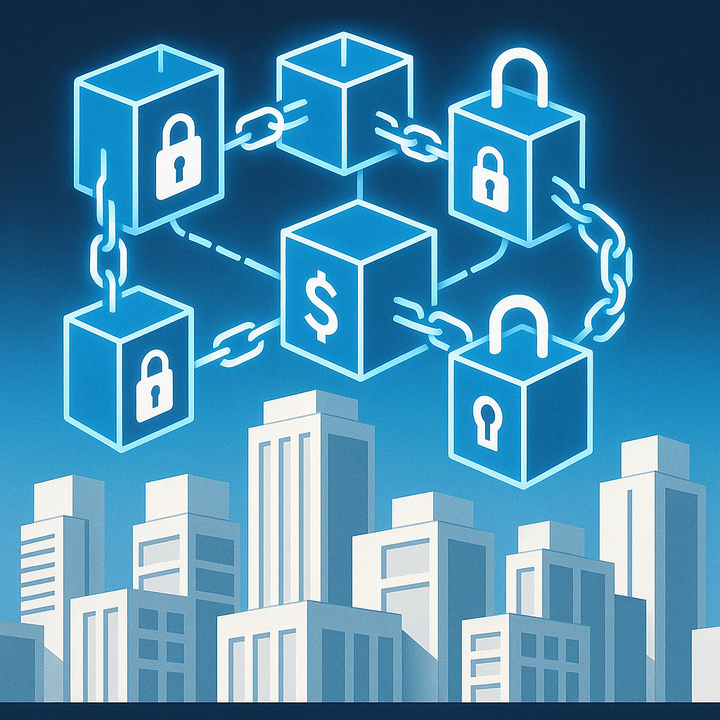
Introduction: The Critical Role of Blockchain Financial Security in 2024
Blockchain financial security commands increasing attention in financial markets as the digital economy matures. Blockchain has shifted from a theoretical innovation to the backbone of secure transaction systems and asset protection. In 2024, rising cyber threats, new digital asset platforms, and evolving regulation mean organizations and investors cannot afford to overlook blockchain’s influence. The focus has expanded from its early days as the underlying technology for cryptocurrencies to providing solutions in mainstream finance. Blockchain ensures immutable records, transparent processes, and robust protection against fraud, setting new standards for financial safeguards.
What Is Blockchain and How Does It Secure Finance?
At its foundation, blockchain is a distributed ledger system. Unlike traditional databases, its records are shared across nodes—independent computers that store identical copies of transaction history—removing the risk of a single point of failure. Each data block contains a set of transactions, time-stamped and cryptographically linked to previous blocks. Before a transaction is added, network-wide consensus protocols verify its validity, making unauthorized modifications nearly impossible and extremely costly. For banking, payments, and lending, this decentralization means enhanced auditability and transparency. Institutions can quickly detect attempted fraud or suspicious activity in near real time. Blockchain also facilitates compliance by recording a tamper-evident trail, making it easier to satisfy regulatory audits. As a result, market participants develop increased trust, and operational risks decline.
Why Blockchain Financial Security Is Essential for Investors in 2024
In today’s landscape, investor confidence often hinges on the reliability and transparency of markets. Blockchain financial security delivers real-time data, reducing information asymmetry and operational risk for both retail and institutional investors. As regulators respond to digital asset proliferation, blockchain’s transparent ledger supports new laws and reporting requirements. Investors benefit from the rise of tokenized securities and blockchain-based settlement layers, which automate trade execution and reduce uncertainty. Because smart contracts execute pre-programmed transactions automatically, settlement risk and counterparty risk decline. Furthermore, blockchain’s ability to record every transaction immutably means improved oversight and compliance transparency. In 2024, these features collectively create a more attractive, stable environment for investment, making blockchain-driven infrastructure a key competitive differentiator.
Blockchain Financial Security: Real-World Strategies
Innovative firms use blockchain to support multi-factor authentication, decentralized identity (DID), and permissioned data sharing. For example, decentralized identity systems allow users to control personal information while permitting only the data necessary for validation to be shared. This gives financial clients greater autonomy and privacy. On investment platforms, blockchain drives accurate real-time tracking of assets, ensuring transparency in fee structures and risk assessments. Tokenization lets investors diversify portfolios with assets like real estate or private equity, using digital tokens to increase liquidity and broaden access. Strategic alliances between traditional banks and blockchain firms have produced hybrid systems that balance established security protocols with modern agility. Notably, technologies like zero-knowledge proofs enable verification of transactions while keeping sensitive information confidential—a crucial advantage in regulated markets. These systems encourage compliance without exposing private client data, which is vital for trust and operational resilience.
Emerging Blockchain Trends Transforming Financial Security
Several trends appear poised to radically impact blockchain financial security in 2024. Zero-knowledge proofs, once theoretical, are rapidly finding commercial applications. They allow for effective validation of transactions without revealing their details, enhancing privacy while preserving compliance. Second, layer-2 scaling solutions such as rollups and sidechains make blockchain networks faster and reduce costs, overcoming bottlenecks that have historically limited adoption. Third, decentralized finance (DeFi) protocols continue to mature, offering new frameworks for risk management, including real-time insurance and compensation mechanisms against smart contract failures. Fourth, the introduction of Central Bank Digital Currencies (CBDCs) built on blockchain brings new levels of transparency and efficiency to both domestic and cross-border payments. These government-backed currencies could standardize security protocols across markets, reducing operational risks. Finally, interoperability standards enable seamless transfers and compliance across different blockchain platforms. As these trends converge, they deliver increased stability and drive mainstream acceptance of secure, transparent financial solutions.
Risks to Watch: Challenges Facing Blockchain Financial Security
No technology is immune to challenges, and blockchain financial security faces technical, operational, and regulatory hurdles. Smart contracts, which automate transactions, can become vulnerable targets if the underlying code contains errors. Security lapses, such as those in cryptocurrency exchanges or digital wallets, remain high-value targets for cybercriminals. Furthermore, regulatory uncertainty in many jurisdictions produces compliance gaps, especially in areas like asset classification, cross-border payments, and anti-money laundering enforcement. Another risk stems from the concentration of control among validator nodes: if too few entities control the network, true decentralization—and therefore security—may be undermined. For blockchain-based custody solutions, securely storing cryptographic keys and ensuring seamless access across platforms introduces operational complexity. Addressing these challenges requires continuous audits, robust cybersecurity protocols, proactive management, and close collaboration among financial institutions, regulators, and technology developers.
Blockchain and Financial Regulation: A Delicate Balance
Regulators worldwide increasingly recognize the potential of blockchain for advancing financial security while still managing systemic risk. In 2024, there is a growing focus on establishing clear frameworks for digital asset reporting, data privacy, and the responsibilities of blockchain-based service providers. Regulatory sandboxes, which allow firms to test blockchain solutions in controlled environments, have gained popularity and contribute to safer product development. Moreover, international bodies are beginning to coordinate standards for cross-jurisdictional data sharing and compliance, reducing barriers to global adoption. This regulatory clarity, in many cases, helps drive mainstream confidence and facilitates institutional investment. Nevertheless, adapting to fast-evolving technologies demands constant dialogue and flexibility between innovators and regulators, ensuring security goals are not compromised by legal gray areas or technological ambiguity.
Opportunities for Innovators and Financial Institutions
There are strong opportunities for pioneers. Large financial organizations increasingly use blockchain to streamline operations, from back-office reconciliation to real-time payments. Innovative fintech firms develop modular regulatory compliance tools that integrate with existing banking software, supporting fast adaptation to new laws or reporting standards. Asset managers expand their offerings by launching blockchain-based investment funds, making regulated digital asset investment accessible to more clients. Because blockchain supports both permissioned and public environments, financial service providers can customize access controls and data privacy settings to match their specific security and compliance needs. Advances in collateral management and stablecoin use enhance efficiency and lower risk for institutional investors. As a result, the combination of cost savings, regulatory transparency, and robust security drives adoption among both startups and established firms.
Case Study: Blockchain in Action for Financial Security
Consider a global bank that implements blockchain for cross-border settlements. Previously, reconciliation across multiple ledgers could take days, with high costs and numerous manual checks. Using a blockchain-based solution, transactions are instantly verified and transparently recorded on a shared ledger accessible by all counterparties. This system both shortens settlement times and reduces the chance of discrepancies or fraud. In addition, advanced cryptography ensures that only authorized parties can access sensitive transaction details, satisfying strict privacy regulations. Another example comes from insurance: parametric insurance contracts on blockchain automatically trigger payouts when predetermined conditions (such as weather events) occur, reducing the need for manual claims processing and fraud investigations. These innovations demonstrate blockchain’s real-world impact on safeguarding financial operations.
Looking Ahead: Blockchain Financial Security and the Future
The journey is far from over. New technologies such as quantum-resistant cryptography could further enhance security, addressing emerging threats before they materialize. Decentralized autonomous organizations (DAOs), governed and operated by blockchain-based smart contracts, may redefine the management models for investment funds and asset pools. As artificial intelligence tools integrate with blockchain, fraud detection and compliance monitoring will improve, automatically adjusting to threats in real time. Education will be crucial; both institutions and investors must stay informed about the changing landscape, balancing opportunities for growth with the need for vigilance.
Conclusion: How Blockchain Financial Security Will Evolve
Over the next few years, blockchain financial security will remain a central focus for forward-thinking financial professionals. Innovations in cryptography, regulatory frameworks, and interoperability will drive wider adoption, while new risks will test the resilience of both technology and governance. As the digital asset ecosystem expands, ongoing education and adaptability become crucial. Staying ahead means understanding not just how blockchain works, but also recognizing its broader impact on trust, compliance, and operational resilience. For continued exploration of these issues, visit our FinTech and Financial Innovation section to discover the latest insights on technology, regulation, and strategic investing.