

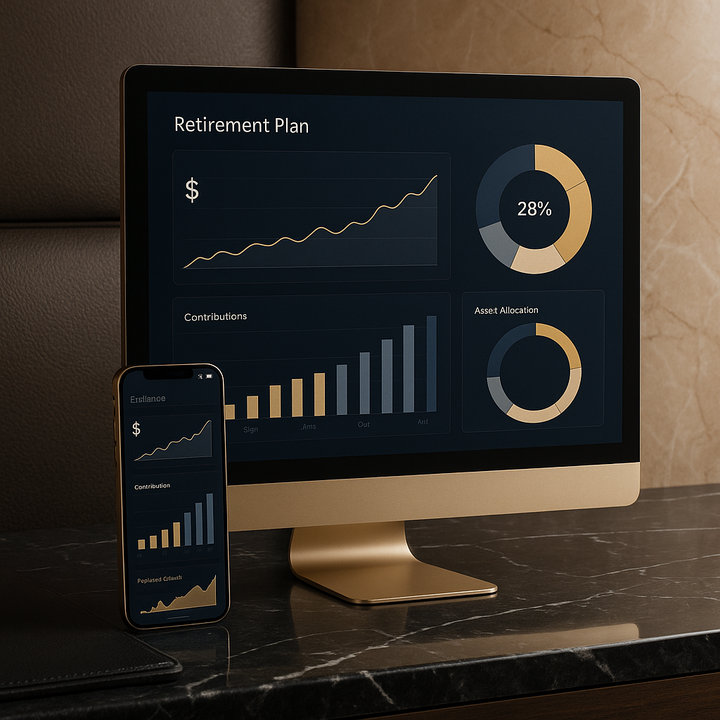
Introduction: The Importance of Retirement Plan Monitoring Tools
Retirement plan monitoring tools are essential for today’s investors seeking financial security in a world defined by economic volatility, longer life spans, and ever-evolving personal circumstances. Integrating digital platforms, automated analytics, and personalized dashboards, these tools change how individuals manage their retirement portfolios. With diversified investment options and growing uncertainty, proper retirement oversight is more critical than ever.
Retirement plan monitoring tools offer precise, actionable data. They empower users to make informed, timely adjustments to their savings and investment strategies. Early access to insights and alerts ensures investors can spot risks and realign objectives as markets shift. In this guide, you’ll discover the capabilities, risks, and trends shaping the future of retirement plan monitoring tools—and learn practical steps for optimizing your own financial planning process.
Understanding Retirement Plan Monitoring Tools
Retirement plan monitoring tools are digital solutions that consolidate information across accounts. These platforms deliver insights into allocations, performance, risk exposure, and regulatory compliance. By harnessing live market data, forecasts, and comparison tools, investors gain a single view of their entire financial landscape. The most effective solutions support on-demand rebalancing, goal tracking, and performance benchmarking.
Some tools go further by integrating artificial intelligence and machine learning. AI-powered platforms provide projections tailored to your goals, spotting anomalies or predicting the effects of different scenarios. Popular retirement plan monitoring tools include financial aggregator apps, robo-advisor dashboards, and dedicated retirement planning software. Each offers different degrees of personalization and automation—giving you as much involvement as you desire.
Why Retirement Plan Monitoring Tools Matter
Investors face challenges like inflation, market shocks, tax changes, and complex fee structures. Retirement plan monitoring tools help mitigate such risks by delivering regular updates, tracking progress, and automating tedious processes. Visual dashboards and real-time analytics improve clarity around asset allocation, goal achievement, and potential gaps in planning.
For many, automation is a game-changer. Automated alerts can trigger reviews for events like allocation drift, unexpected fees, or regulatory updates. By reducing manual errors and saving time, these tools ensure alignment with your risk tolerance and financial objectives. Regular reviews keep plans relevant as personal or economic circumstances change.
Technological Advancements: How Tools Have Improved
Recent years have seen dramatic improvements in retirement plan monitoring tools. Artificial intelligence and big data enhance forecasting and behavioral analysis. Secure cloud infrastructure allows real-time access from any device and simplifies integration with banks, brokers, and insurers. APIs (Application Programming Interfaces) now allow data to flow seamlessly across platforms—delivering a single, holistic view of your finances.
Data aggregation is another key innovation. Instead of tracking each account separately, users enjoy a unified dashboard summarizing all assets, liabilities, and progress toward retirement goals. These solutions also offer scenario modeling, stress testing, and even behavioral nudges to encourage saving. Enhanced security protocols, such as multi-factor authentication, protect sensitive data in today’s digital age.
How to Use Retirement Plan Monitoring Tools Effectively
Maximizing the benefits of retirement plan monitoring tools starts with integrating all financial data. Connect accounts, synchronize transaction feeds, and regularly update personal information for accurate analysis. Set up personalized alerts for major events—like significant allocation shifts, fee changes, or approaching milestones.
Adopt a disciplined review schedule. Monthly or quarterly portfolio reviews help ensure you meet your saving and investment goals. Examine performance against relevant benchmarks and, if necessary, rebalance based on new analytics or personal circumstances. Document the rationale behind each decision; this builds accountability and helps track long-term progress.
Managing Risk and Avoiding Pitfalls
No tool is perfect. Investors using retirement plan monitoring tools must understand both their advantages and limitations. Data security and privacy remain top concerns—choose tools with robust encryption, secure authentication, and transparent privacy policies. Avoid overreliance on automation: while AI can support decisions, it cannot always account for personal intuition or unique circumstances.
Legacy or illiquid assets, such as older pension plans or real estate, may not seamlessly integrate with all digital platforms. Regularly review your tool’s scope and manually update excluded assets. Keeping abreast of regulatory and fee changes ensures compliance and helps prevent costly errors. Finally, use feedback provided by alerts and dashboards as a guide, not an absolute directive—context matters, and human judgment remains invaluable.
Key Features to Look For in Retirement Plan Monitoring Tools
When evaluating platforms, prioritize retirement plan monitoring tools that offer consolidated dashboards, automated data import, and intuitive user experiences. Scenario analysis modules test various outcomes, while customizable alerts keep you informed of key changes. Benchmarking tools compare your plan’s performance with industry standards, highlighting strengths and areas for improvement.
Mobile access is increasingly important. Look for solutions with mobile-friendly interfaces, notifications, and secure remote access. AI-driven features such as predictive analytics or portfolio optimization engines deliver additional value—particularly for users with complex, multi-asset plans. Finally, a platform should support secure collaboration if you work with a financial advisor, spouse, or family members.
Emerging Trends in Retirement Plan Monitoring
Several trends are shaping the evolution of retirement plan monitoring tools. Blockchain-powered platforms promise enhanced transparency and immutable records, improving trust and auditability. Open banking enables seamless connectivity between traditional and digital assets, including cryptocurrencies and alternative investments.
Demand for ESG (Environmental, Social, and Governance) analytics has grown, driven by investors seeking sustainable and responsible portfolios. Retirement plan monitoring tools now frequently integrate ESG scoring—aligning financial outcomes with personal values. On the collaboration front, multi-user dashboards enable real-time, shared oversight among stakeholders, from spouses to advisors.
Practical Strategies for Ongoing Success
To succeed with retirement plan monitoring tools, adopt a proactive and structured approach. Update your financial profile whenever your career or life circumstances change. Use scenario analysis to stress-test your portfolio against market downturns or unexpected expenses. Regularly reassess your risk tolerance and ensure asset allocations match your time horizon and objectives.
Leverage educational resources offered by your chosen platform. Webinars, articles, and interactive simulations deepen your understanding, sharpen your decision-making skills, and strengthen long-term discipline. Document every major review and portfolio change to track your progress and build a resilient financial plan. When possible, seek professional guidance to supplement automated recommendations and fill knowledge gaps.
Opportunities and Challenges Ahead
Retirement plan monitoring tools offer both opportunities and challenges. Opportunities include increased transparency, sharper decision-making, and real-time oversight. Technology expands access to features once reserved for high-net-worth investors, making tailored financial management more widely available.
However, users must remain aware of the potential for cybersecurity threats and system errors. It’s wise to maintain diversified access—don’t put all oversight in one platform. Regularly update passwords, control data-sharing permissions, and follow cybersecurity best practices. By combining vigilance with proactive use of advanced retirement plan monitoring tools, investors can confidently prepare for retirement amid uncertainty.
The Role of Education and Advisor Collaboration
Financial education amplifies the benefits of using retirement plan monitoring tools. Informed investors better interpret analytical reports, question assumptions, and avoid emotional decision-making. Many platforms now offer integrated learning tools, FAQ sections, and knowledge bases that address common concerns.
Collaboration with advisors remains vital. Digital tools support transparency, accelerate routine updates, and streamline report sharing. These features allow advisors to focus on higher-level strategy and creative problem-solving. Together, technology and professional insight lay the groundwork for robust, adaptable retirement planning.
The Future of Retirement Plan Management
Looking ahead, retirement plan monitoring tools will continue to evolve. Tomorrow’s solutions will offer even more advanced AI-driven insights, improved user experiences, and greater integration across financial ecosystems. As the regulatory environment changes and financial products diversify, robust monitoring ensures investors stay one step ahead.
The success of any retirement plan relies on consistent oversight, timely intervention, and lifelong learning. By combining sophisticated digital tools with ongoing education and collaboration, investors can secure a more stable, confident financial future.
Conclusion: Harness the Power of Retirement Plan Monitoring Tools
Retirement plan monitoring tools provide more control and clarity for those planning for the future. By combining smart platforms with personal discipline and advisor collaboration, investors can improve security, respond to change, and stay on track for their long-term goals. Explore the dedicated section on Financial Planning and Retirement to deepen your knowledge and take the next step in your retirement journey.