

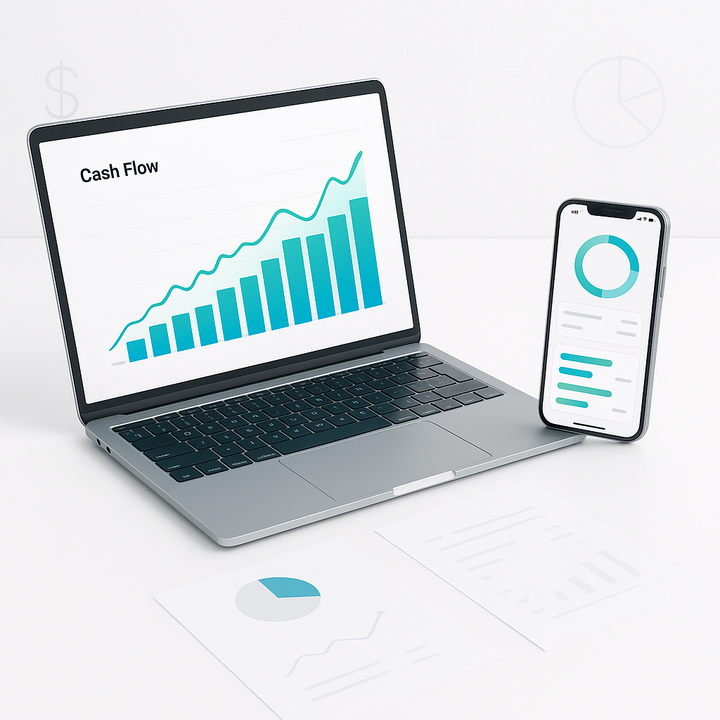
Introduction: Personal Cash Flow Optimization in Today’s Economy
Personal cash flow optimization is a crucial practice in today’s complex and unpredictable financial environment. As markets shift, interest rates swing, and economic uncertainty persists, individuals must proactively monitor and adjust their cash flow to secure financial resilience and pursue lasting growth. The sophistication of modern financial products, coupled with the rapid emergence of digital tools, puts a premium on how you manage income and expenses. Those who consistently practice personal cash flow optimization find themselves less vulnerable to negative shocks while having capital at the ready for promising investment opportunities. The following guide explores how advanced cash flow management can serve as a transformative pillar for anyone determined to maximize financial potential.
Defining Personal Cash Flow and Its Significance
Personal cash flow—in its simplest terms—is the net total of all money entering and leaving your accounts within a specified period. To calculate this, subtract total outflows, including spending, loan repayments, and investment contributions, from total inflows such as salaries, passive income, and capital gains. While budgets provide static forward-looking projections, personal cash flow optimization focuses on the real-time ebb and flow of your finances, allowing you to make informed decisions based on accurate liquidity analysis. More sophisticated approaches take into account irregular income, seasonal expenses, and anticipated windfalls, allowing you to forecast and plan with much greater precision. This detailed awareness lays the foundation for efficient risk mitigation, successful wealth growth, and strategic investment allocation.
Why Personal Cash Flow Optimization Matters for Investors
For investors, personal cash flow optimization enables more confident and timely capital allocation. When you know that your finances can absorb new investments or temporary market downturns, you can act quickly and without worry. In particular, maintaining consistent liquidity lets you jump on high-yield opportunities before they are widely discovered or oversubscribed. Rigorous personal cash flow optimization also removes the pressure to sell assets during market volatility, thus preserving potential value and avoiding forced losses. In addition, stable and well-planned cash flow management improves your credit profile and allows negotiation of lower interest rates when borrowing or refinancing. This contributes to long-term portfolio diversification and even enhances after-tax returns since you can deliberately time income recognition and deductions. Overall, optimizing personal cash flow transforms your wealth from a fixed pool of resources into a dynamic engine for growth.
Core Strategies of Personal Cash Flow Optimization
Modern personal cash flow optimization is anchored in discipline, transparency, and adaptability. Here are some advanced strategies for optimizing your cash flow:
- Automate Transaction Tracking and Categorization: Use digital personal finance tools to automatically import and classify transactions. This provides real-time insight and highlights spending anomalies that manual tracking might miss.
- Implement Zero-Based Budgeting: This method requires you to justify every expense each period, ensuring no funds are passively spent. Leftover cash can be redirected toward investments or debt repayment.
- Diversify Income Streams: Relying solely on a salary is risky in today’s job market. Create alternative income, such as dividends, rental yields, or freelance gigs, to build a more resilient inflow structure.
- Apply Cash Flow Laddering: Stagger income sources and outgoing payments to minimize idle funds and better match liabilities with available cash. For example, time your recurring bills and set up follows on interest payments or investment distributions.
- Schedule Automated Transfers: Set up recurring transfers so that excess liquidity is promptly moved into savings or higher-yield investments, rather than sitting unused in checking accounts.
Adopting such strategies in your routine strengthens oversight and ensures resource allocation aligns with your long-term goals.
Leveraging Technology to Streamline Cash Flow Optimization
Technology is an enabler for efficient and reliable personal cash flow optimization. Today’s digital tools provide several significant advantages:
- Personal Finance Apps: Sophisticated platforms can sync with your bank accounts, credit cards, and investment portfolios to present a unified and real-time overview of your finances.
- AI-Driven Analytics: Intelligent algorithms spot abnormal spending, identify underused assets, and forecast future cash flow trends using your historical data. Smart alerts can notify you of budget overruns or new money-saving opportunities.
- Open Banking APIs: Seamlessly aggregate data from multiple financial institutions, giving complete transparency over incoming and outgoing funds, whether they come from salaries, side ventures, or passive investments.
- Specialized Tax Optimization Tools: These platforms help schedule tax payments for the most beneficial times within the year, smoothing liquidity demands and minimizing cash drag from unexpected obligations.
The efficiency gains from automation not only reduce the risk of manual oversight but also relieve you of the mental workload required for daily monitoring, freeing your attention for more crucial investment decisions.
Advanced Approaches: Beyond the Basics
To maximize the potential of personal cash flow optimization, you should also consider:
- Scenario Planning: Regularly stress-test your finances against hypothetical adverse events such as job loss, health emergencies, or market corrections. Adjust your cash reserves accordingly to maintain readiness.
- Dynamic Forecasting: Use updated data analytics tools to adjust forecasts in real time, ensuring spending and saving decisions reflect the current financial reality.
- Contingency Buffers: Always hold a cash cushion beyond the standard emergency fund to cover unpredictable or extraordinary expenses, especially if much of your income is variable.
- Perpetual Review Cycle: Set quarterly or monthly checkpoints to reassess cash flow, expenditures, and savings allocations in light of changing goals or market conditions.
These advanced tactics make your approach to personal cash flow optimization far more adaptive and resilient.
Risks in Pursuing Personal Cash Flow Optimization
Despite these benefits, personal cash flow optimization presents certain risks. Over-reliance on automation may cause you to overlook hidden fees, fraud, or unexpected changes to recurring payments. Aggressive minimization of idle cash, driven by a desire not to miss investment returns, can result in insufficient liquidity to manage emergencies or unplanned expenses. Overleveraging available credit in pursuit of more deployable capital risks increased future interest costs or even financial distress if your inflow projections fall short. In addition, the use of aggregation and digital management platforms elevates the risk of data breaches or the exposure of sensitive information. Lastly, models based entirely on historical cash flow cannot always anticipate ‘black swan’ events or sudden shifts in personal or broader economic conditions. As such, it is wise to regularly review your methods, adjust for new risks, and maintain a margin for error when forecasting.
Opportunities Unlocked by Masterful Cash Flow Management
When you excel at personal cash flow optimization, unique financial possibilities arise:
- Preferred Borrowing Terms: Lenders favor applicants who demonstrate consistent, positive cash flow, since they represent lower risk. This means you often have access to better rates, higher credit limits, and unique loan products.
- Smoother Dollar-Cost Averaging: Predictable cash flow supports systematic investing strategies, which help to mitigate the impact of market volatility over time.
- Participation in Alternative Investments: New asset classes such as private equity, venture capital, and direct real estate frequently require multi-stage contributions. Robust cash flow makes such participation feasible.
- Strategic Philanthropy: Reliable surplus cash paves the way for charitable giving that takes advantage of tax deductions and strategic legacy planning without stretching your core liquidity.
- Seizing Timely Opportunities: When you know your cash position precisely, you can swiftly invest in emerging opportunities or acquire valuable assets at a discount in market downturns.
In the coming years, greater integration of real-time analytics and AI will make these opportunities even more accessible to those who continue to enhance their personal cash flow optimization strategies.
Implementing Your Personal Cash Flow Optimization Plan
Start with a frank, detailed audit of your current cash inflows and outflows. Leverage technology where possible to automate routine tracking, but always complement digital oversight with periodic manual reviews to catch outlier events. Build flexibility into your system to allow for both planned and unplanned opportunities or emergencies. Revisit your cash flow map and projections regularly, especially after significant income or expense changes, major life milestones, or macroeconomic shifts.
Remember: the objective is not only to minimize expenses or maximize returns but to continuously create conditions where your capital works for you based on your goals, risk tolerance, and situation.
Conclusion: Personal Cash Flow Optimization as a Continuous Advantage
Personal cash flow optimization isn’t a one-off project—it is an ongoing practice that improves your ability to manage risk, seize opportunities, and reach your most ambitious goals. Those who master cash flow monitoring and forecasting put themselves in a superior position when facing market changes, job transitions, or major purchases. The interplay between technology, disciplined review, and adaptive strategy transforms cash flow from a reactive chore to a proactive tool for ongoing wealth creation. Whether your priority is stability, growth, or maximizing discretionary income, prioritizing personal cash flow optimization will serve as a foundation for lasting success. For more depth, explore our Advanced Personal Finance section and build on the insights shared here.