

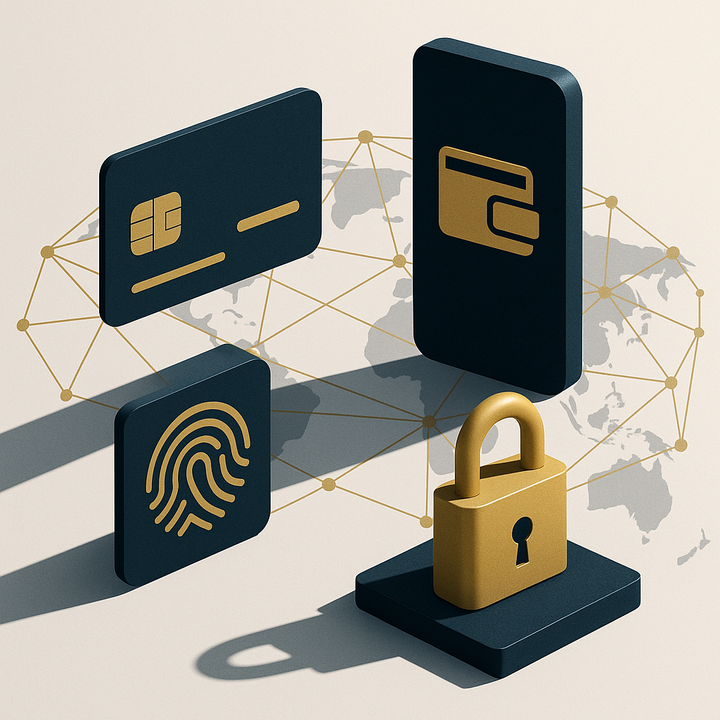
Introduction: The Growing Role of New Payment Platforms
New payment platforms have become crucial in shaping the future of digital transactions. As they rapidly integrate with the global financial ecosystem, these platforms transform how individuals and businesses exchange value. Their relevance continues to grow due to advancements in technology, evolving consumer expectations, and a dynamic regulatory landscape. According to recent findings from the World Bank and the Bank for International Settlements (BIS), the global value of digital payments surpassed $7 trillion in 2023, highlighting their massive scale and centrality to modern finance. To thrive and adapt, financial stakeholders must now focus both on technological innovation and the resilience of digital transaction security.
What Defines New Payment Platforms?
New payment platforms refer to digital solutions that streamline and secure electronic payments across various environments. Unlike legacy systems, they support seamless transactions through diverse channels – including mobile apps, web browsers, and physical points of sale. Examples include digital wallets like Apple Pay and Google Pay, peer-to-peer services such as Venmo, Pix, Zelle, and Klarna’s buy-now-pay-later solutions. Additionally, open banking protocols and blockchain-driven payment systems extend these platforms’ capabilities well beyond traditional card payments.
The distinguishing feature of new payment platforms is their technological foundation. Robust cryptography ensures data privacy and transaction integrity, while cloud-native infrastructure provides the scalability needed to support millions of concurrent transactions worldwide. Application programming interfaces (APIs) drive seamless connecting of banks, merchants, and third-party service providers. As a result, the ecosystem fosters rapid innovation, interoperability, and financial inclusion, meeting the demands of consumers and enterprises alike.
Fintechs often lead the way in developing user-friendly interfaces, smart routing, advanced risk analytics, and instant onboarding procedures. Furthermore, regulatory changes such as the European PSD2 directive have catalyzed a shift toward openness, enabling authorized third parties to initiate and facilitate payments, ultimately enhancing competition and consumer choice.
New Payment Platforms and Investor Appeal
For investors, new payment platforms present a compelling mix of opportunity and complexity. Their core strengths—scalability, data-driven insights, and platform partnerships—amplify their revenue potential across retail, e-commerce, and financial services. Platforms that achieve robust adoption rates commonly demonstrate enviable recurring revenues and sticky network effects. For instance, companies like Stripe and Adyen have built valuations in the tens of billions by powering digital commerce infrastructure for marketplaces, SaaS businesses, and traditional merchants.
Access to granular, real-time transaction data gives payment companies an enormous edge: it supports personalization, rapid KYC (Know Your Customer) verification, risk assessment, and regulatory compliance. The 2023 McKinsey Payments Report underlines that global investment in payment and security fintechs continues to rise by double digits annually, underscoring broad investor confidence in the sector’s future.
Nevertheless, the competitive environment is brisk. New entrants are constantly innovating, while established players frequently face pressure to deliver new features. Regulatory adaptation, cybersecurity preparedness, and sustained product differentiation define those platforms likely to thrive. Investors must diligently track security incidents, shifting partner alliances, and product launches to accurately price upside potential and systemic threats.
Key Technologies Empowering Digital Transactions
Several technologies act as the backbone for high-performing new payment platforms. Near Field Communication (NFC) allows contactless payments via card or phone with a tap. Tokenization—the substitution of card numbers with random digital tokens—prevents exposure of sensitive data during transactions. Biometric authentication, leveraging fingerprint, facial, or voice recognition, strengthens defenses against unauthorized access and fraud.
Scalable cloud computing infrastructure guarantees reliable transaction processing even at peak times, supporting expansion into new regions without costly hardware investments. Distributed ledger technology (DLT), especially blockchain, provides immutable transaction record-keeping and enables innovative use cases, including programmable payments via smart contracts.
APIs allow integration of loyalty programs, insurance products, or additional risk management services, expanding the range of features on offer. Meanwhile, advanced fraud analytics, powered by artificial intelligence, help platforms rapidly detect suspicious patterns by referencing industry-wide threat data, thus reducing fraudulent transaction rates.
Combined, these innovations reduce operational overhead, help platforms comply with global standards, and create a user experience that emphasizes both speed and security.
Security Challenges in the Digital Age
With new payment platforms gaining popularity, security threats grow more complex and widespread. Attackers exploit technical weaknesses through phishing scams, malware distribution, man-in-the-middle attacks, and the creation of synthetic identities to trick systems into unauthorized transfers. The 2023 Verizon Data Breach Investigations Report cites the financial services sector as consistently being a top target, with payment credentials among hackers’ primary objectives.
The introduction of innovative features—such as multifactor authentication, instant payments, or AI-based fraud detection—creates ongoing challenges for security teams. Attackers now probe vulnerabilities through app stores, compromised APIs, and cross-border transaction loopholes. Additionally, fragmented global regulation increases difficulty for international payment companies that must adapt to divergent privacy, authentication, and reporting standards in different markets.
Security must go beyond compliance checklists. Leading platforms invest in layered security approaches: multi-factor authentication, behavioral analytics capable of identifying unusual user activities, and a strong culture of secure code development. Ongoing staff education and incident response drills help organizations remain agile as new threats emerge. Industry-wide information sharing, facilitated by consortia like FS-ISAC, enhances real-time threat detection and coordinated mitigation efforts.
Effective Strategies for Secure and Scalable Digital Transactions
Mitigating risks on new payment platforms depends on implementing robust, adaptive controls. For end-users, selecting digital wallets or apps with proven biometric authentication and real-time fraud alerts ensures a safer payment experience. Keeping personal devices and apps updated, alongside using unique passwords and enabling device lockouts, further reduces exposure to common attacks.
For institutions, it is critical to adopt sophisticated, real-time monitoring powered by machine learning. These systems can instantly flag and block anomalous activity, greatly limiting damage from fraud or account takeovers. Enforcing transaction limits, especially for high-value or cross-border transfers, adds another layer of defense.
Financial service providers must conduct frequent security audits of their own technologies and those of their partners. Third-party APIs, used to embed financial services into different platforms, can introduce vulnerabilities if not regularly reviewed and updated to meet standards such as PCI DSS and ISO/IEC 27001.
User education also plays a fundamental role. Regular communication about emerging phishing schemes, social engineering threats, and best cybersecurity practices reduces successful attacks. Transparency and prompt disclosure of breaches help maintain user trust and support regulatory compliance in crisis situations.
Risks and Opportunities in the Expanding Ecosystem
The expansion of new payment platforms yields exciting opportunities for inclusion and growth, but it also introduces challenges that demand careful management. Digital payments reduce barriers for unbanked populations, enable efficient remittances, and open the door to innovative business models, such as gig economy payroll and real-time international settlements. Open banking APIs and decentralized finance (DeFi) push the boundaries further, allowing non-bank firms to participate in core financial intermediation roles.
Yet, as the ecosystem widens, the risk picture becomes more complex. The proliferation of platforms increases counterparty risk, as well as the potential for fragmentation and systemic outages that could ripple through the financial system. Regulatory gaps in emerging markets sometimes enable financial crime, and weak oversight can encourage malicious actors to exploit vulnerabilities for personal gain.
Strategically, ongoing industry consolidation and regulatory convergence will shape the future landscape. Payment platforms with effective, scalable risk controls and agile approaches to compliance will be positioned to seize growth opportunities while protecting users and the broader system.
The Road Ahead: Trends, Regulation, and Innovation
Looking forward, new payment platforms are on course for deeper integration with artificial intelligence, greater cross-border interoperability, and increasing adoption of programmable money. Projects like central bank digital currencies (CBDCs) could reshape global payment rails, offering more secure, efficient, and government-backed alternatives to privately run systems.
Regulators now reevaluate cybersecurity frameworks, as well as rules for data portability and open competition. International efforts toward regulatory harmonization are gathering steam, particularly in areas such as anti-money laundering, customer authentication, and data localization. Platforms with flexible, scalable compliance architectures will be more resilient as these trends play out.
Payment ecosystem winners will effectively balance innovative product development and the implementation of privacy-preserving techniques to build enduring trust among both institutional and retail users. The ability to leverage advanced analytics, maintain operational transparency, and swiftly adapt to changing regulatory requirements remains a defecting force in staying ahead.
Conclusion: Embracing Transformation with Insight
Emerging payment platforms democratize access to digital finance and create new possibilities for commerce and investment. Yet, their increased usage introduces shifting risks that demand constant vigilance and sophisticated protective strategies. Understanding the interplay between technological advancement, regulation, and security is essential for seizing opportunity and minimizing downside across the sector. Ongoing learning and adaptation empower investors, firms, and users to remain agile as payment systems evolve. For further exploration of key industry trends and the latest insights, visit our dedicated category: FinTech and Financial Innovation.