

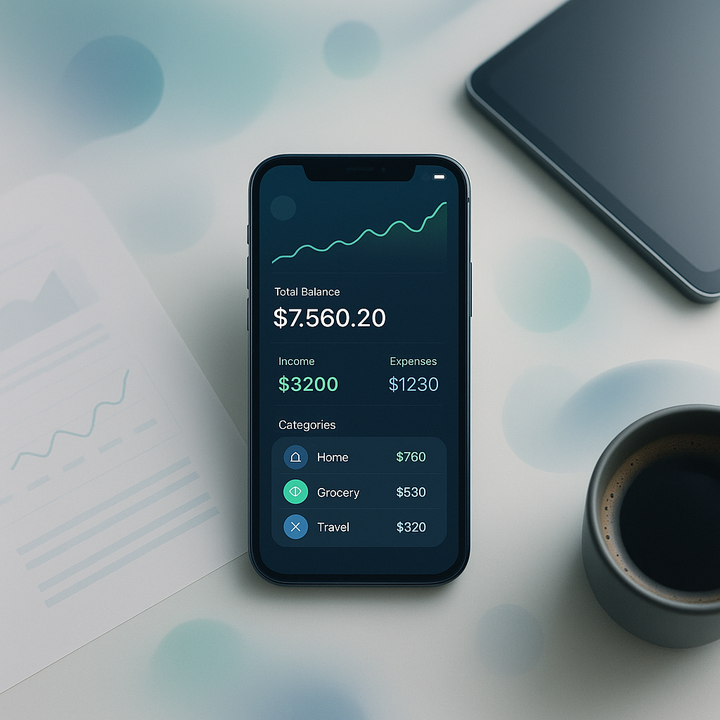
Introduction: The Importance of Innovative Financial Control Apps in Modern Finance
Innovative financial control apps have fundamentally reshaped how individuals manage their personal finances, offering unparalleled access to real-time data, automation, and strategic insights. In a digital age marked by economic uncertainty, rapidly evolving investment products, and ever-expanding options for consumers, these applications provide critical tools for achieving financial clarity. By centralizing financial information, from spending to investments and long-term objectives, these apps allow users to see the bigger picture and act accordingly.
As advanced technologies—such as cloud computing, artificial intelligence, and secure authentication protocols—expand, more consumers embrace platforms that simplify complicated money management tasks. This trend is especially important for those seeking not just convenience, but true mastery over their finances in an environment where each decision can influence both short-term stability and long-term wealth.
What Defines Innovative Financial Control Apps?
Innovative financial control apps are software platforms that integrate various aspects of a user’s financial life. Unlike traditional tracking tools, they offer account aggregation, investment monitoring, predictive analysis, and intelligent automation. Users connect bank accounts, credit cards, securities accounts, and sometimes even crypto assets or alternative investments, all within a unified interface.
Core features typically include:
- Real-time expense and income tracking: Users receive up-to-the-minute updates and visualizations.
- Smart categorization and budgeting: Machine learning empowers these apps to recognize spending trends and suggest personalized budgets.
- Goal-driven automation: From saving for a house to retirement, users set tangible goals and allow the app to automate transfers, investments, or notifications based on progress.
- Secure data protection: Encryption and two-factor authentication are standard, providing confidence in the safety of personal information.
Examples like Mint, YNAB, and Fintonic use AI to surface actionable insights, while digital banking apps like Revolut and Nubank merge spending control with investment and savings options. These platforms support proactive financial behavior by making every aspect of personal money management accessible and actionable from a smartphone.
Why Innovative Financial Control Apps Matter for Investors
Investors rely on innovative financial control apps to streamline their decision-making and align daily spending with broader wealth goals. These apps consolidate assets, liabilities, and cash flows, giving users valuable perspective. A complete overview not only increases awareness about investment opportunities but helps assess whether personal spending supports—or undermines—desired outcomes, like funding a property purchase or reaching a retirement milestone.
Through data-driven recommendations and scenario simulations, investors can optimize asset allocation, rebalance portfolios, and respond swiftly to market changes or life events. Apps that offer benchmarking tools allow users to measure their savings or investment rates against market or peer group averages. For those juggling multiple accounts or asset types, these solutions make the process of managing complex portfolios intuitive and transparent. As the financial landscape grows more dynamic, such visibility and control are no longer optional—they are vital for long-term success.
Maximizing Value: Strategies for Using Financial Control Apps Effectively
To get the most out of innovative financial control apps, users should adopt a systematic approach:
- Full account integration: Link all financial accounts—including banks, investments, retirement plans, and even digital wallets. This creates a complete, accurate dataset for the app to process.
- Personalized setup: Customize expense and income categories, define actionable financial goals (such as debt reduction or saving for travel), and adjust notification preferences to what truly matters.
- Routine reviews: Schedule weekly or monthly check-ins to review automated reports and identify trends or issues. This helps catch bad habits early and tweak goals as needed.
- Leverage automation features: Enable round-up savings or scheduled transfers to investment accounts. Allow the app to automate bill payments or debt repayments for added discipline.
- Benchmark and compare: Use available benchmarking tools to compare progress against industry standards or similar user profiles.
- Maintain top-notch security: Regularly update passwords, activate multi-factor authentication, and ensure your device is protected against malware or unauthorized access.
Establishing a routine for interacting with your app of choice builds accountability and creates a virtuous cycle of financial improvement.
Emerging Features: Trends Shaping the Future of Finance Apps
Constant innovation is a defining characteristic of financial control apps. Artificial intelligence continues to enhance categorization, spending predictions, and personalized advice. For instance, many apps now use AI to predict cash flow shortages, detect potential fraud, or offer tailored suggestions based on past behavior.
Open banking APIs are expanding interconnectivity by securely linking disparate data sources, thus deepening user insights and enabling richer analysis. Gamification elements, like achievement badges or competitive savings challenges, motivate consistent app engagement. Environmental, Social, and Governance (ESG) metrics are now being incorporated to help users align financial choices with personal values and ethics.
Cutting-edge platforms also experiment with tools for real-time tax impact analysis, smart debt repayment sequencing, and blockchain-based records for enhanced transparency and traceability. The expansion of digital wallets, instant payment options, and integration with non-traditional financial services further blurs the line between banking, investing, and daily spending—all managed within a single, user-centric ecosystem.
Mitigating Risks: Challenges Faced by Users of Financial Control Apps
Innovative financial control apps offer many benefits, but they are not without risks. Chief among them is data privacy. By collecting sensitive financial information, these apps become potential targets for cybercriminals. It is crucial for users to evaluate the protections in place—look for end-to-end encryption, transparent privacy policies, and proactive security updates.
Additionally, inconsistent regulations across jurisdictions can create uncertainty about data ownership, liability, and recourse in case of a breach. It is important to choose reputable providers, preferably those with a proven track record in security and regulatory compliance.
Overreliance on algorithmic or automated recommendations poses another risk. While AI-driven suggestions can be powerful, they may not always account for unique circumstances or sudden market changes. Users should stay informed and periodically review settings and algorithms that drive their app’s insights.
Operational risks, such as an app discontinuing its service or changing its terms, can lead to loss or limited access to past data. Maintaining independent backups or exports is a wise precaution. Users who remain aware of these risks and proactively manage them enjoy the greatest benefits from modern financial control solutions.
Unlocking Opportunities: Value for Individuals and Institutions
The rise of innovative financial control apps extends benefits far beyond individual users. For ordinary people, these tools democratize access to professional-grade analytics and planning, narrowing the gap between individual and institutional investors. Consumers can make data-driven decisions that align with their realities and aspirations.
For fintech companies and traditional banks, integration with popular apps becomes a strategic avenue for client retention, cross-selling, and deepening customer loyalty. By analyzing anonymized app data, institutions develop more effective financial products tailored to real needs, improving risk management and marketing precision.
On an industry-wide level, widespread adoption breeds higher expectations for privacy, transparency, and ease of use—pressuring providers to continually raise standards. As a result, all stakeholders benefit from a more responsive, user-focused financial ecosystem that rewards innovation and responsible stewardship.
Integrating Financial Control Apps with Broader Wealth Management
A notable trend in the fintech space is the growing integration of financial control apps into broader wealth management platforms. Leading solutions offer APIs or built-in modules that allow communication with robo-advisors, insurance platforms, retirement planners, and alternative investment services. This fusion consolidates fragmented aspects of personal finance into a single dashboard.
For the user, this means a more comprehensive overview—checking, saving, investing, borrowing, and protecting are now accessible in one place. International customers or frequent travelers benefit from real-time foreign exchange updates, global portfolio tracking, and streamlined tax reporting tools. App-based scenario planning lets users model the impact of changing savings, investment returns, or life circumstances, improving adaptability and resilience.
Financial professionals can extend their reach by providing guidance through these platforms, giving users tailored advice or automated strategies that respond to fast-moving shifts in markets or individual priorities.
Education Is Key: Building Financial Literacy Through Innovative Financial Control Apps
While technology enables smarter money management, financial literacy remains the foundation for wise decision-making. Many contemporary financial control apps address this by integrating educational resources—ranging from budgeting tutorials and risk-analysis guides to interactive simulations that illustrate the long-term effects of spending and saving decisions.
Notifications that celebrate reaching goals or issue timely reminders further promote positive financial behavior. Many apps also offer articles, podcasts, and community forums directly within the platform, allowing users to learn at their own pace and exchange experiences with peers. This educational component bridges the gap between insight and action, ensuring users understand the why behind their financial choices—not just the how.
Conclusion: Embracing Innovative Financial Control Apps for a Stronger Financial Future
Innovative financial control apps are transforming the way people engage with their finances, offering actionable insights, automated routines, and secure, centralized platforms. These tools help users set meaningful goals, track progress accurately, and make adjustments with confidence—even in turbulent economic conditions. As app features evolve to include ever more powerful analytics and integration opportunities, their role in achieving financial resilience cannot be overstated. Ultimately, the most successful users are those who combine technology with a commitment to financial literacy and regular self-review. To explore further how technology is shaping tomorrow’s wealth management, visit the FinTech and Financial Innovation category and access resources tailored for the digital age.